 People · Events · Communities

Associations and chambers run more events than almost any other kind of organization: monthly networking breakfasts, ribbon cuttings, education webinars, committee meetings, an annual gala, and often a conference on top. The event software you choose touches every one of them.
This guide compares seven platforms associations and chambers actually use, from all-in-one membership platforms with events built in to standalone conference tools and public ticketing, with real pricing and honest trade-offs.
Disclosure: we make Melora Connect, one of the platforms on this list. Every competitor price comes from public sources, and every entry, including ours, lists what to watch out for.
Quick comparison
| Platform | Type | Best for | Pricing model |
|---|---|---|---|
| Melora Connect | AMS with events | Managed setup, events tied to membership | Annual tiers, from $3,000/yr |
| Glue Up | AMS with events | Event-heavy and international orgs | Published tiers, from ~$4,500/yr |
| GrowthZone (ChamberMaster) | AMS with events | Chambers of commerce | Quote-based, ~$3,900/yr+ |
| WildApricot | AMS with events | Small, volunteer-run groups | Per contact, from ~$63/mo |
| Cvent | Standalone | Large conferences and trade shows | Quote-based |
| Whova | Standalone | Conference attendee app and networking | Quote-based, per event |
| Eventbrite | Public ticketing | Events open to the public | Per-ticket fees |
Pricing from public sources as of October 2026. Confirm with each vendor.
Two types of event software: know which one you are buying
AMS platforms with events built in keep events in the same system as membership. Member pricing is automatic, and every registration and check-in lands on the member’s record. Best when you run many events for members throughout the year.
Standalone event platforms focus only on events. They can go deeper on large conferences, exhibitors, and attendee apps, but member data has to be connected from your AMS. Best for one or two very large events a year.
Most associations and chambers are better served by the first type, with a standalone tool added only for a flagship conference. Our guide to event management software explains this choice in more depth.
How we evaluated these platforms
We looked at what matters most for membership organizations: member pricing (automatic or manual), connection to member records, check-in and badges, support for a full calendar of small and large events, total cost including ticket fees, and setup and support. For the wider feature list, sorted into must-haves and nice-to-haves, see our guide to event planning software features.
The 7 best event management platforms for associations and chambers
1. Melora Connect
AMS with events built in
Best for: Associations and chambers that want events, membership, and payments in one record, with setup done for them
Melora Connect is a managed-service platform where the events module shares the same member record as dues, renewals, and communications. The team behind it comes from event production, so the platform is built around how events run on the day.
-
Member pricing applied automatically, with card and ACH payments through MeloraPay into your own Stripe account
-
Ticket tiers, discount and access codes, group and table orders, members-only events, and check-in at the door
-
Online events with their own join link (Zoom, Teams, or Google Meet), sent with each confirmation, QuickBooks Online and Desktop export, and staffed onboarding at every plan level
Pricing: Included in the platform, from $3,000 per year (see our published pricing), plus one-time onboarding from $999. Priced by tier, not per ticket.
Watch out for: There is no native webinar tool, and the Zoom integration is coming soon; for now, online events carry their own join link (Zoom, Teams, or Google Meet), sent with each confirmation. The Melora Connect Go member app and HQ staff app, with QR check-in, are coming soon, and event budget and vendor tracking are not available yet. There is no self-serve trial; you get a tailored demo instead.
2. Glue Up
AMS with events built in
Best for: Event-heavy chambers and associations, including those operating internationally
Glue Up combines membership, events, CRM, and community, and is used by more than 1,500 associations, chambers, and other communities. Events are one of its strongest areas.
-
Registration, ticketing, mobile check-in, and badge management
-
Separate mobile apps for staff and members at no extra cost
-
Built-in CRM and community features
Pricing: Published tiers from $4,500 per year (Plus) to $15,500 per year (Pro), according to Converve’s 2026 AMS comparison.
Watch out for: A broad feature set takes time to learn. Ask for a demo built on one of your own events and a full multi-year quote.
3. GrowthZone (ChamberMaster)
AMS with events built in
Best for: Chambers of commerce that want a chamber-specific system
GrowthZone’s ChamberMaster product is a long-standing choice for chambers, with event registration and calendars tied into chamber membership and directories.
-
Event calendar and registration connected to member directories
-
Chamber-specific tools for member businesses
-
Part of a product family that scales to larger associations
Pricing: Quote-based; GrowthZone does not publish prices. SaaSworthy lists it from $3,900 per year, plus onboarding.
Watch out for: Confirm which GrowthZone product you are being quoted for, and what event features are included versus add-ons.
4. WildApricot
AMS with events built in
Best for: Small and volunteer-run organizations running simple events
WildApricot includes event registration, payments, and a website in every plan, and is a common starting point for small organizations.
-
Event registration and online payments on every plan
-
Built-in website and member mobile app
-
Self-serve setup with a free trial
Pricing: Per contact. Capterra lists plans from about $63 per month for 100 contacts.
Watch out for: Event attendees count as contacts, alongside donors and subscribers. Organizations with busy, open event calendars can move up pricing tiers faster than their membership grows.
5. Cvent
Standalone event platform
Best for: Large associations running major conferences and trade shows
Cvent is one of the best-known enterprise event platforms, built for large, complex in-person, virtual, and hybrid events with sessions, exhibitors, and venue sourcing.
-
Deep conference tools: sessions, speakers, exhibitors, and attendee apps
-
Venue sourcing and hotel room blocks
-
Enterprise reporting and integrations
Pricing: Quote-based.
Watch out for: Powerful but complex, and priced for large events. Member data usually has to be connected from your AMS, so ask exactly how member pricing and attendance sync back.
6. Whova
Standalone event platform
Best for: Conferences that want a strong attendee app and networking
Whova is known for its event app: agendas, attendee networking, messaging, and engagement features for conferences and multi-day events.
-
Attendee app with agenda, networking, and messaging
-
Event registration and check-in
-
Virtual and hybrid event support
Pricing: Quote-based, typically per event.
Watch out for: Per-event pricing suits a few big events better than a full monthly calendar, and attendee data lives outside your member database unless connected.
7. Eventbrite
Public ticketing platform
Best for: Public-facing events open to non-members
Eventbrite is the most familiar ticketing platform for public events, with a large discovery marketplace that can bring in new audiences.
-
Fast setup for ticketed events
-
Discovery marketplace that reaches the public
-
Mobile check-in app
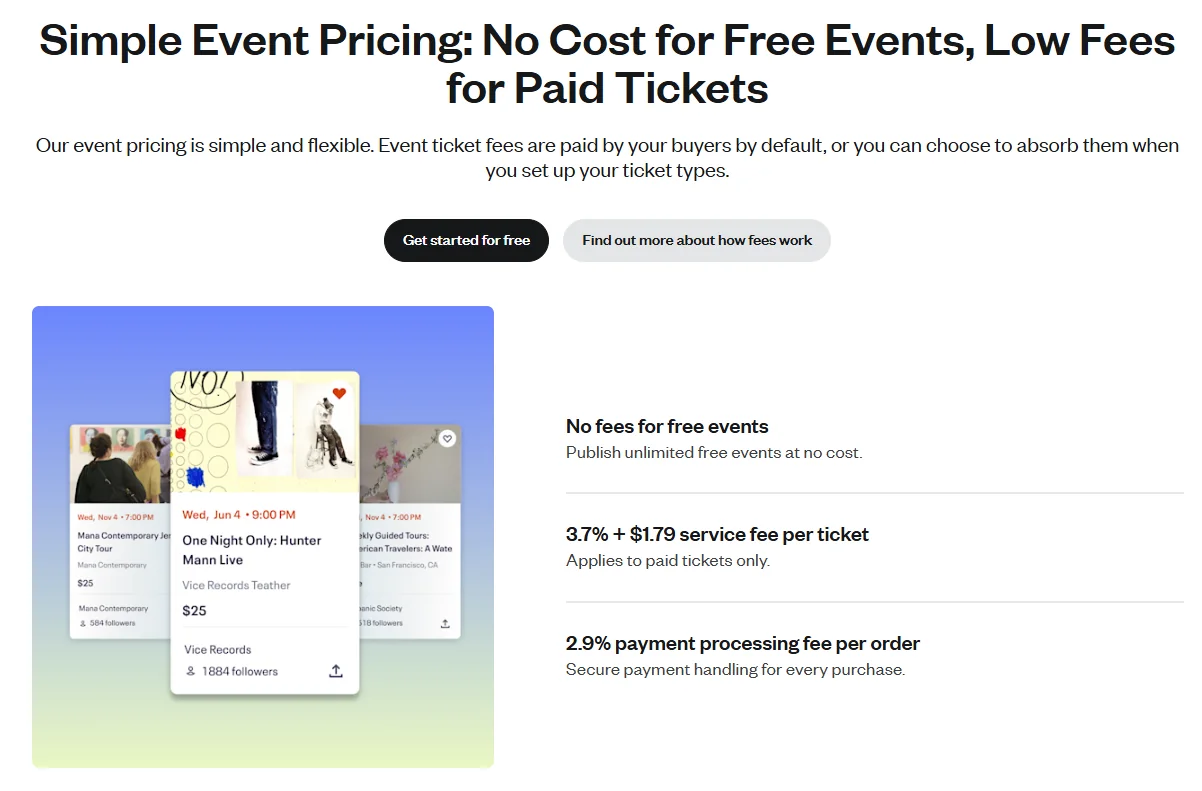
Pricing: Free events are free. For paid tickets in the US, Eventbrite lists a 3.7% plus $1.79 service fee per ticket and a 2.9% payment processing fee per order, which organizers can pass on to buyers or absorb.
Watch out for: No membership logic: member pricing needs discount codes, and attendance does not reach your member records. Per-ticket fees add up across a full calendar.
Shortlisting Melora Connect? Bring one real event to a demo and we will build it with you, member pricing and all. Book a demo
What per-ticket fees really cost: a quick example
Per-ticket fees look small on a single ticket. Here is how they add up for a typical chamber calendar, using Eventbrite’s listed US fees for paid tickets.
| Amount | |
|---|---|
| Events per year | 12 networking events |
| Paid tickets per event | 60 |
| Ticket price | $40 |
| Service fee per ticket (3.7% + $1.79) | $3.27 |
| Processing fee (2.9%, if one ticket per order) | $1.16 |
| Fees per ticket | About $4.43 (11% of the ticket) |
| Fees per year (720 tickets) | About $3,190 |
Organizers can pass those fees to attendees, but members notice a fee on top of a member price. Compare that annual figure with a flat platform subscription before you decide. (Payment processing fees apply on any platform. The service fee is the part a subscription model avoids, and in this example it comes to about $2,350 a year on its own.)
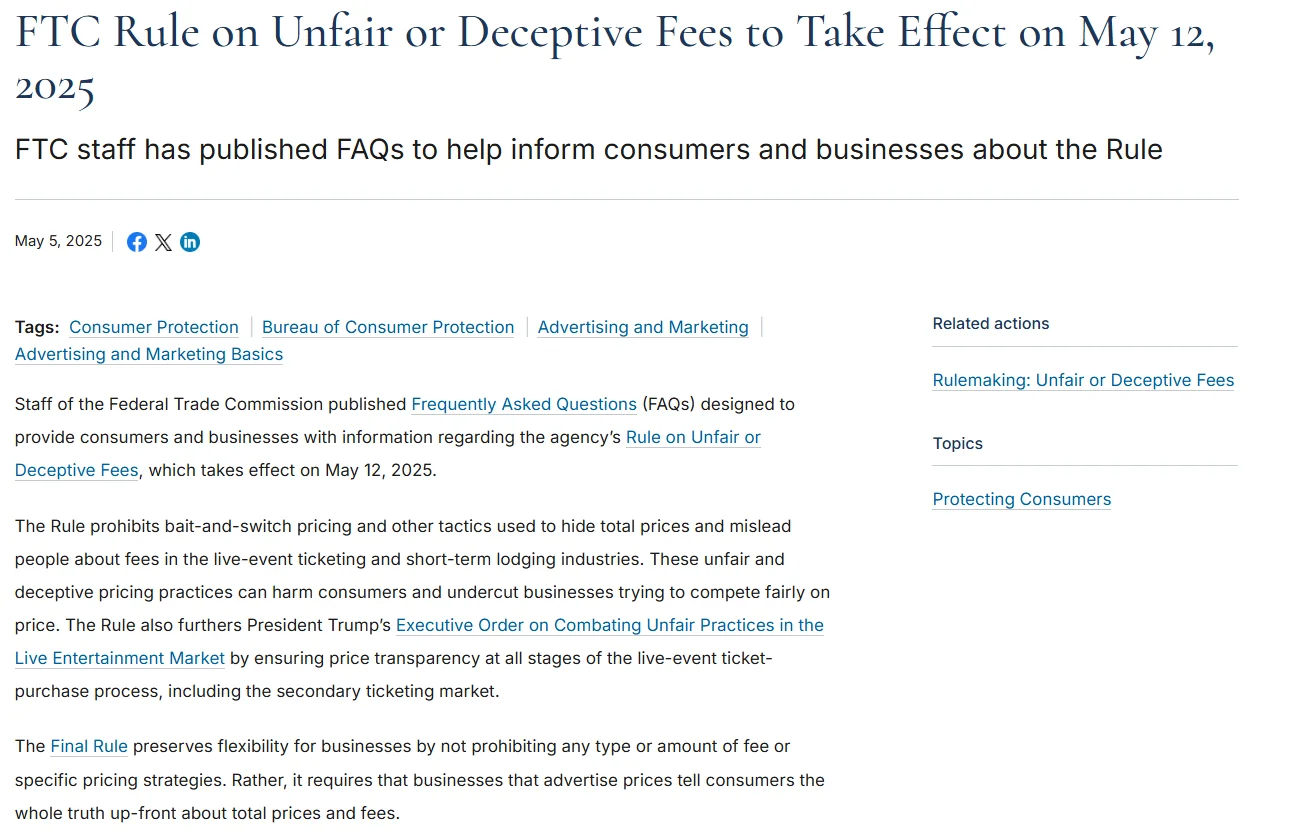
Passing fees on is now in plain sight. Since May 12, 2025, the FTC’s Rule on Unfair or Deceptive Fees requires businesses that advertise live-event ticket prices in the US to show the total price, including mandatory fees, up front. Members see the fee in the first price on the page, not just at checkout.
To compare a full year of ticket fees with a flat subscription and the rest of your tools, use our free chamber tech stack cost calculator.
Quick picks: which platform fits your organization?
| If you are | Look first at |
|---|---|
| A chamber running frequent networking events | Melora Connect, GrowthZone, Glue Up |
| An association that wants events, membership, and setup handled together | Melora Connect |
| A small volunteer-run group with a few simple events | WildApricot |
| Running one large conference with exhibitors | Cvent or Whova, connected to your AMS |
| Hosting events mainly for the general public | Eventbrite |
| Operating across several countries | Glue Up |
What chambers need that associations do not (and vice versa)
Chambers run many short, local events for member businesses: networking breakfasts, ribbon cuttings, business expos. They need fast registration, company-level memberships (several employees under one member business), sponsor visibility, and quick check-in. If you are weighing whole chamber platforms, not just events, see our guide to the best chamber of commerce software.
Associations more often run education and conferences for individual professionals. They need session tracking, continuing education credits, speaker management, and hybrid options.
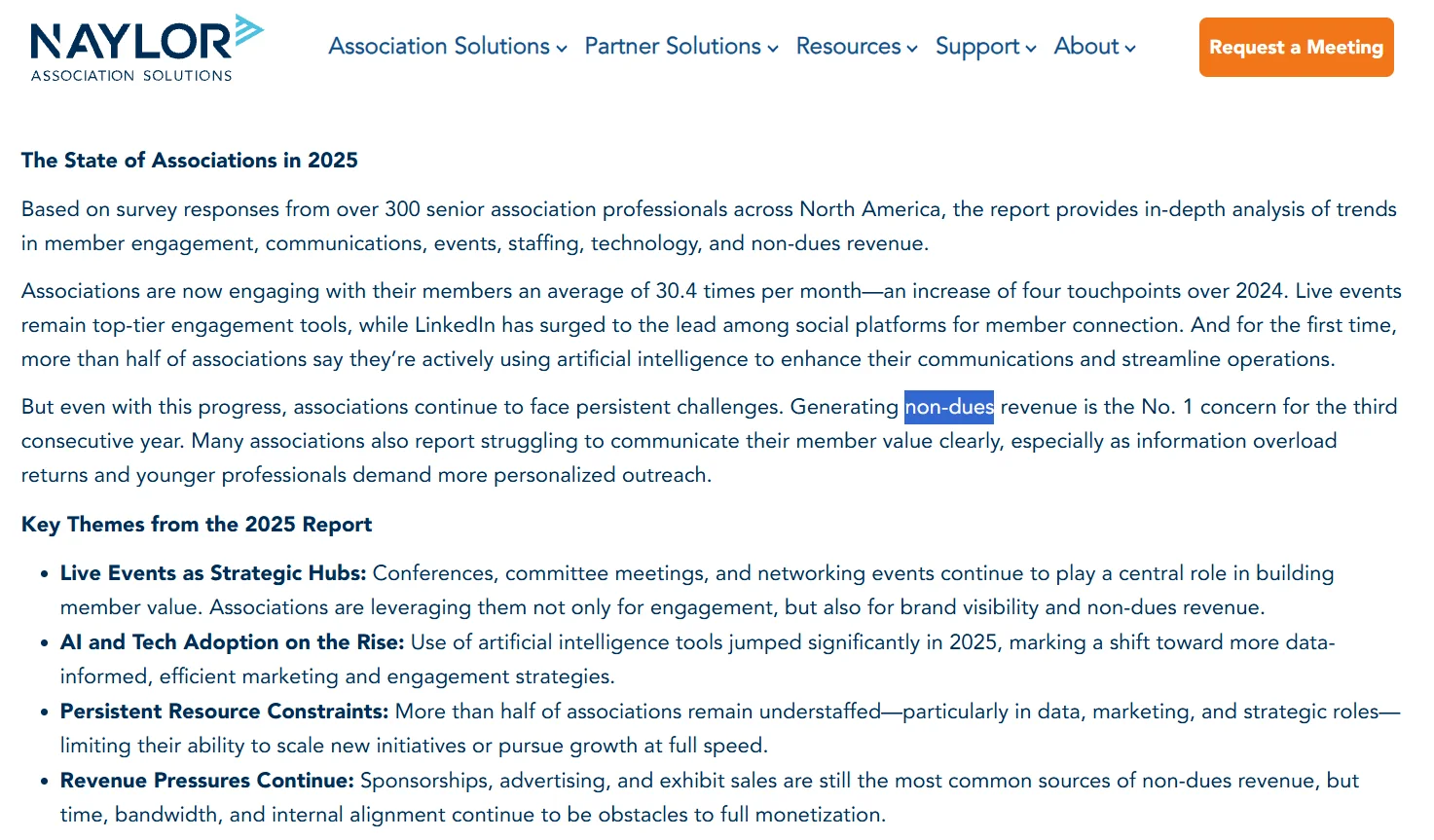
Both also lean on events for revenue. In Naylor’s 2025 Association Benchmarking Report, based on more than 300 senior association professionals, generating non-dues revenue was the No. 1 concern for the third year in a row, and sponsorships, advertising, and exhibit sales were still the most common non-dues sources. Event software that gives sponsors accurate attendance numbers makes those packages easier to sell and renew.
Both need the same foundation: member pricing that works automatically and attendance that counts as engagement. For the broader platform decision, see our list of the best association management software.
Frequently asked questions
What is the best event management software for associations?
For most associations, the best choice is a platform that connects events to membership, so member pricing and attendance history work automatically. Standalone conference tools make sense for very large events, connected to your AMS.
What is the best event software for chambers of commerce?
Chambers often look at GrowthZone (ChamberMaster), Glue Up, and Melora Connect, since all three keep events tied to member businesses. The right fit depends on your event volume, budget, and how much setup help you want.
Should we use Eventbrite for member events?
Eventbrite works well for public events and reaching new audiences, but it has no membership logic, so member pricing needs codes and attendance does not reach your member records. Per-ticket fees also add up over a full calendar. Our comparison of association event software and general event platforms covers when a public ticketing tool is enough.
The bottom line
The best event software for an association or chamber is not the one with the flashiest conference features. It is the one that handles your whole calendar, makes member pricing automatic, and turns every check-in into engagement data you can use at renewal time.
Shortlist two or three platforms, score them side by side with our event software comparison scorecard, and ask each to build one of your real events in the demo. Then compare total yearly cost, including ticket fees. Our guide on how to choose event management software walks through the full process.
Ready to ask vendors formally? Our free membership software RFP template turns your requirements into questions every vendor has to answer in writing.