 People · Events · Communities
Quick answer: Nonprofit event planning software helps a nonprofit plan, sell, run and follow up on fundraising events such as galas, walks and benefit breakfasts. The best tools sell tickets, tables and donations in one checkout, check guests in from the same list, send receipts and thank-yous automatically, and add every guest to one supporter record.
Key takeaways
-
Sell tickets, tables and donations in one checkout, so every gift is tied to a guest.
-
Put every guest on one supporter record, not on a spreadsheet that dies after the event.
-
Plan the follow-up before the event: thank first-time guests within a day.
-
Measure success by how many guests give again, not only by what you raised that night.
For a nonprofit, an event is never just an event. A gala, a walk or a community breakfast raises money, thanks supporters and recruits new ones. Nonprofit event planning software keeps those jobs connected. When tickets, donations and guest lists live in different tools, the supporters you worked hardest to meet slip through the cracks.
This guide covers what the software should handle, which features to compare, and how to turn first-time guests into repeat donors, using an illustrative spring gala.
What is nonprofit event planning software?
Nonprofit event planning software is a platform that helps a nonprofit plan, sell, run and follow up on fundraising events while keeping tickets, donations and supporter data in one place. Unlike general ticketing tools, it treats every attendee as a relationship worth keeping, not just a sale.
It is a focused part of the wider category in our guide to event management software, applied to planning one fundraising event well. If you are choosing a platform for a whole program of nonprofit events, see our guide to event management software for nonprofits.
Why do fundraising events need connected software?
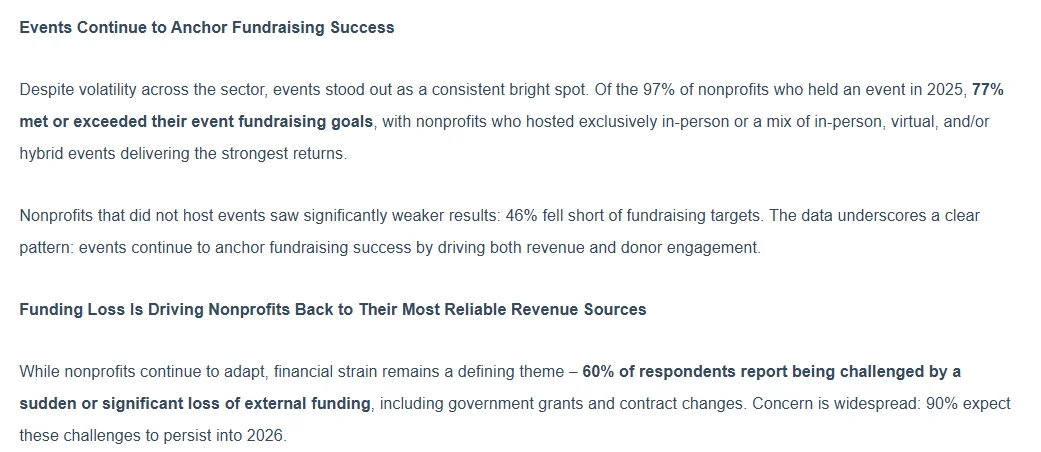
Events still work. In Bonterra’s 2026 Fundraising Outlook Report announcement, based on 1,273 nonprofit professionals, 97% of nonprofits held an event in 2025, and 77% of those met or exceeded their event fundraising goals. Among nonprofits that did not host events, 46% fell short of their fundraising targets. Bonterra sells nonprofit fundraising software, including OneCause event tools, so read the framing with that in mind.
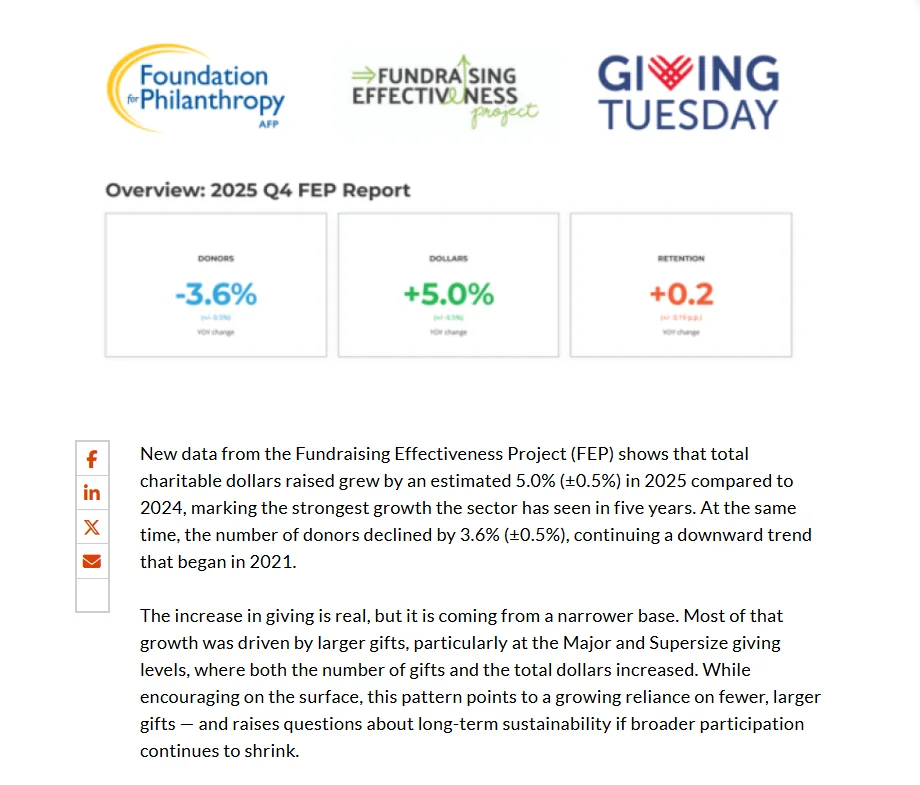
The harder problem is keeping the people. The Fundraising Effectiveness Project’s 2025 results, published by the Association of Fundraising Professionals, show dollars raised grew an estimated 5.0% in 2025 while the number of donors declined 3.6%. Overall donor retention edged up only from 43.1% to 43.3%. In other words, more than half of donors did not give again.
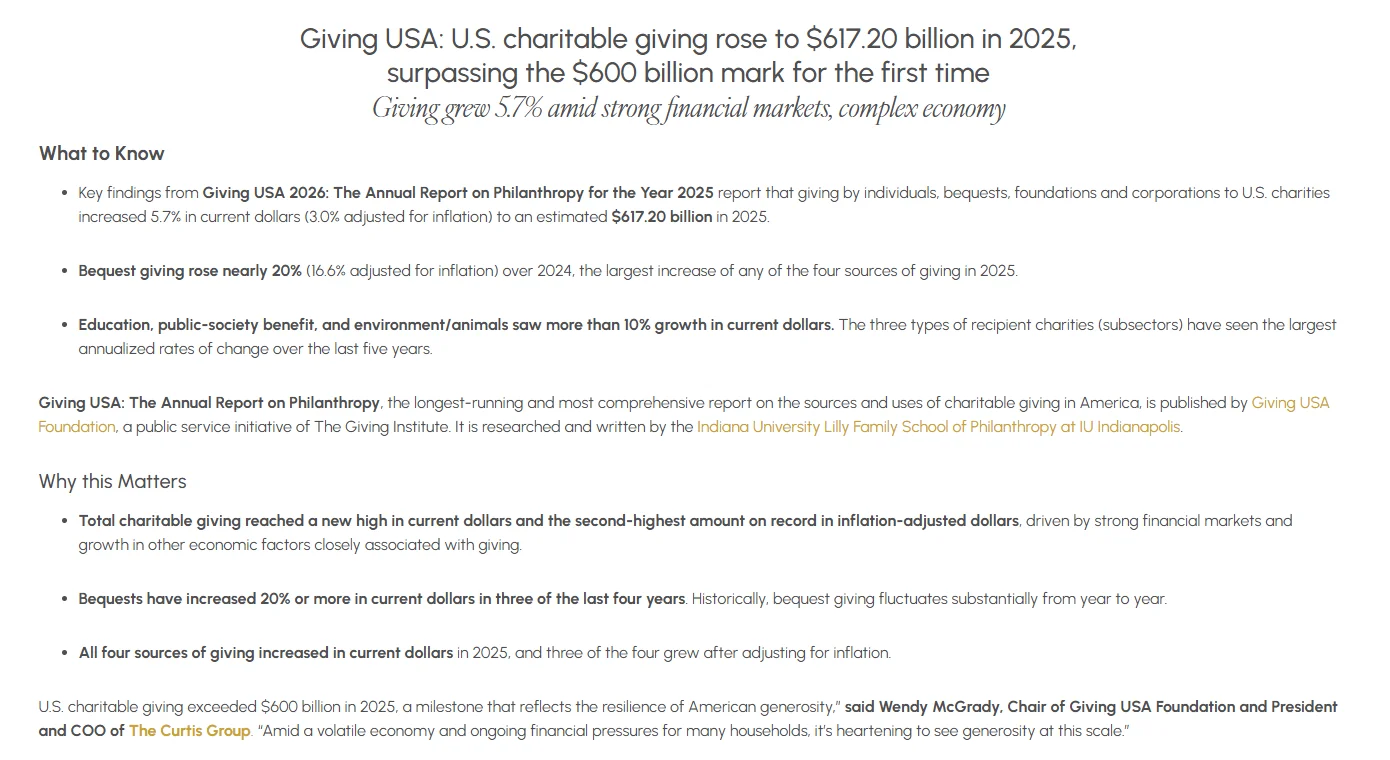
Individuals are still the core of that money. Giving USA 2026 from the Giving USA Foundation estimates that Americans gave $617.20 billion to charity in 2025, up 5.7% in current dollars (3.0% adjusted for inflation), with individuals giving $394.2 billion.
A fundraising event is one of the few times many individual supporters are in the same room as your team. If the guest list ends up in a spreadsheet nobody opens again, the event raised money but lost the relationship.
What should nonprofit event planning software handle before, during and after?
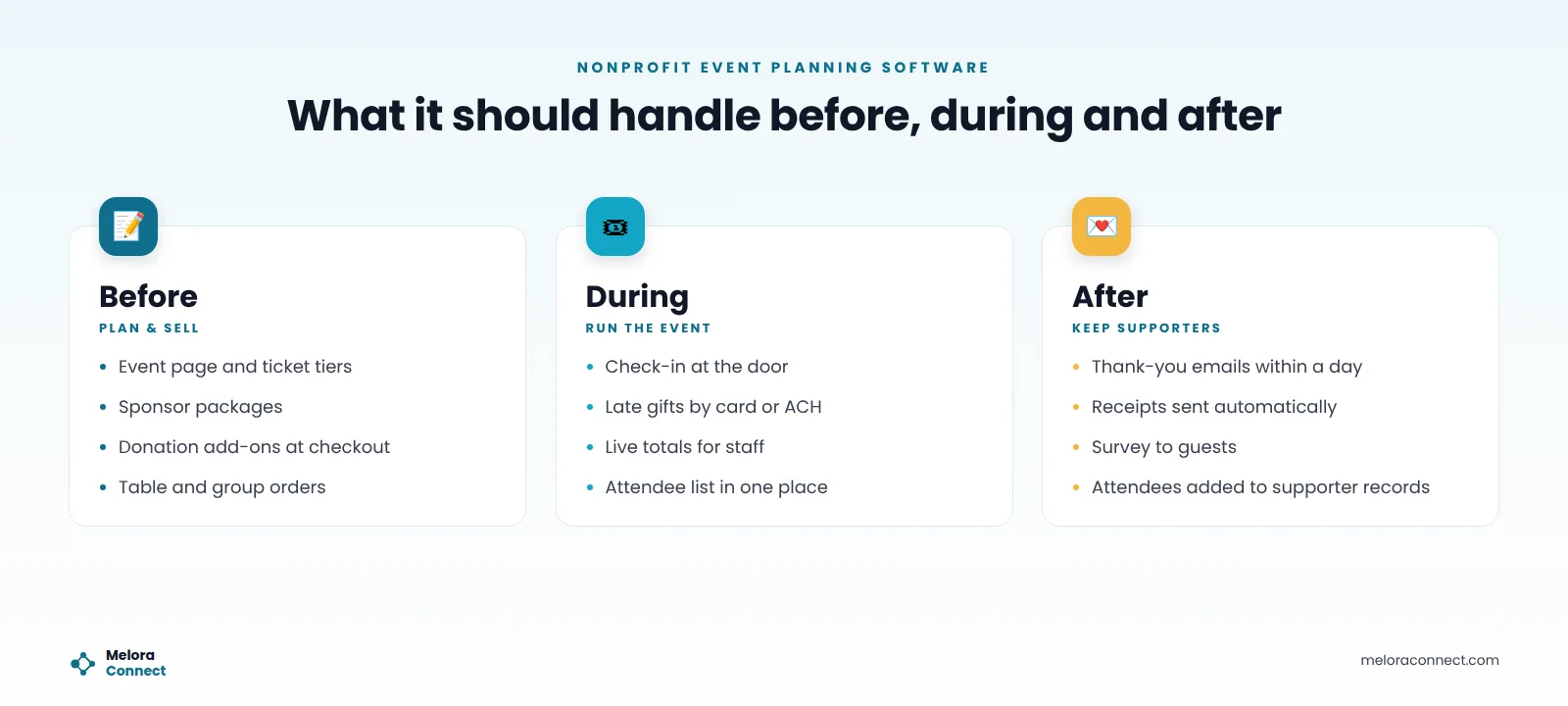
Good nonprofit event planning software supports the whole event: selling tickets and collecting donations before, fast check-in during, and thank-yous and receipts after. The graphic above is a general checklist for any nonprofit event, not a list of one product’s features.
Before: plan and sell
Build one event page with the date, venue, cause, program and prices. Offer a few clear ticket tiers, such as individual, table of ten and sponsor table, and let guests add a gift as they buy. Use access codes for comped guests instead of a separate list.
During: run the event
Check guests in from the same list you sold from, so you know who arrived and who still owes a payment. If part of the program is streamed, online guests should register through the same flow and get their own join link. Our guide to online event management software covers hybrid events in more depth.
After: keep the supporters
Send receipts automatically. Thank every guest within a day, with a more personal message for first-time guests. Most important, make sure every guest, buyer and donor lands on a supporter record you will use for the next appeal.
Nonprofit event planning software features: what to look for
Use this table to pressure-test any nonprofit event planning software you evaluate.
| Feature | What to look for | Red flag |
|---|---|---|
| Tickets and donations together | Guests can add a gift when they buy a ticket, in one payment | Donations go through a separate form or site |
| Table and group orders | One buyer purchases a table and adds guest names later | Staff collect table guest names by email |
| Ticket tiers and access codes | Individual, table, sponsor and comped tickets on one page | A new form for every price |
| Online payments and receipts | Card and bank transfer, receipts sent automatically | Receipts typed and emailed by hand |
| Fast check-in | Guests checked in from the same list you sold from | Printed lists marked with a pen |
| Volunteer and staff access | Helpers can check guests in without full admin rights | Everyone shares one admin login |
| Supporter records | Every attendee and donor added to one profile | Attendee lists exported and merged after the event |
| Follow-up email | Segmented thank-yous and surveys from the guest list | A separate email tool and a CSV upload |
For the registration side, including how many fields to ask for, see our guide to event registration software. When you are ready to compare vendors, our guide on how to choose event management software lays out the process.
Comparing event platforms for your gala? Score up to three platforms against the same criteria, with a true-cost worksheet for your budget, in our free Event Software Comparison Scorecard. Download the scorecard
What does a gala planning timeline look like in the software?
Here is a simple timeline for a spring gala. The weeks are illustrative; adjust them to your event’s size.
| When | What to do | In the software |
|---|---|---|
| 12 weeks out | Set the goal, budget and ticket tiers | Event page draft, ticket tiers, table price, sponsor tickets |
| 10 weeks out | Open sales to board members and past guests | Access codes for early or comped tickets, segmented invitation email |
| 8 weeks out | Open public sales | Event page live, donation option at checkout |
| 4 weeks out | Chase table captains for guest names | Group and table orders with guest names |
| 1 week out | Confirm numbers with the venue | Events dashboard: tickets sold, guests named, dietary notes |
| Event day | Check guests in and take late gifts | Check-in at the door from the same list |
| Day after | Thank every guest, personally thank first-time guests | Segmented email to attendees, first-time guests and donors |
| 2 weeks after | Survey guests and report results to the board | Survey, dashboard totals, list of new supporters |
Example: the gala that kept its guests
This example is illustrative, not customer data. Picture a local nonprofit hosting its spring gala for 220 guests: 12 tables of ten at $1,200 and 100 individual tickets at $120.
In a patchwork setup, tickets sell on one site, donations come through another, and volunteers check names on paper. Afterward, nobody can say which of the 220 guests were first-time supporters, and the thank-you goes out ten days later.
With connected nonprofit event planning software, guests buy tickets and add donations in one checkout, table captains add their guests’ names to the order, and staff check everyone in from the same list. The next morning, the team filters the guest list: 90 guests have never given before. They get a personal thank-you and an invitation to a smaller follow-up event, and their gifts and attendance sit on their records for the next appeal.
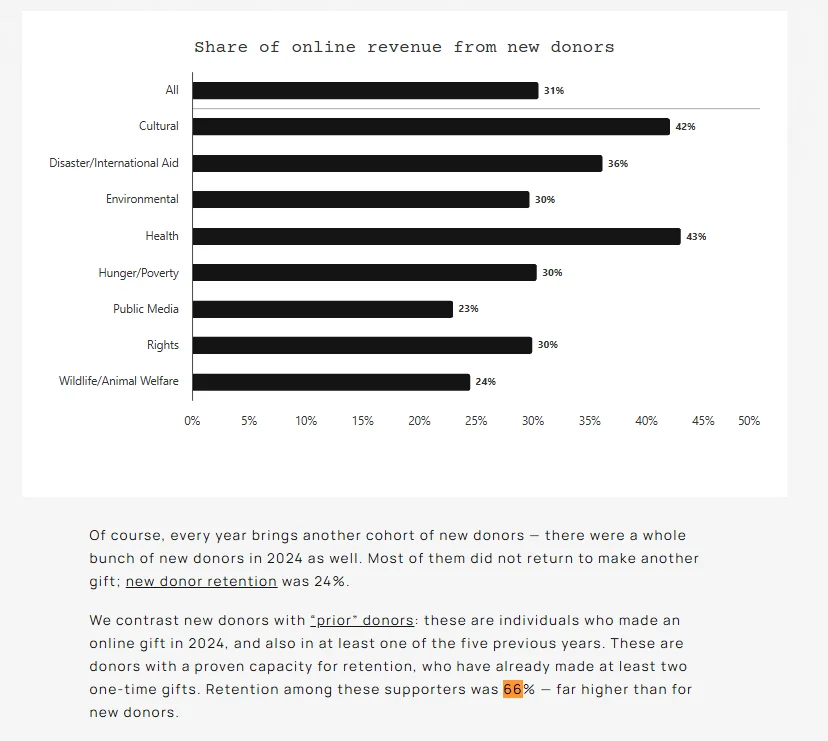
Why does that matter? In M+R Benchmarks 2026, new online donor retention was 24%, compared with 66% for prior donors. Those figures describe online donors, not gala guests, but the gap is the point: first-time supporters are the easiest to lose. At 24%, our illustrative gala would keep about 22 of its 90 first-time guests. At 35%, it would keep about 32, ten more supporters from the same evening.
Which numbers should you track after a fundraising event?
Total raised is the number everyone asks for. These four show whether the event built lasting support:
-
Net raised per guest: (ticket revenue + donations − event costs) ÷ guests who attended.
-
Show rate: guests checked in ÷ tickets sold × 100.
-
First-time guest share: first-time supporters ÷ all guests × 100.
-
Second-gift rate: first-time guests who give again within 12 months ÷ first-time guests × 100.
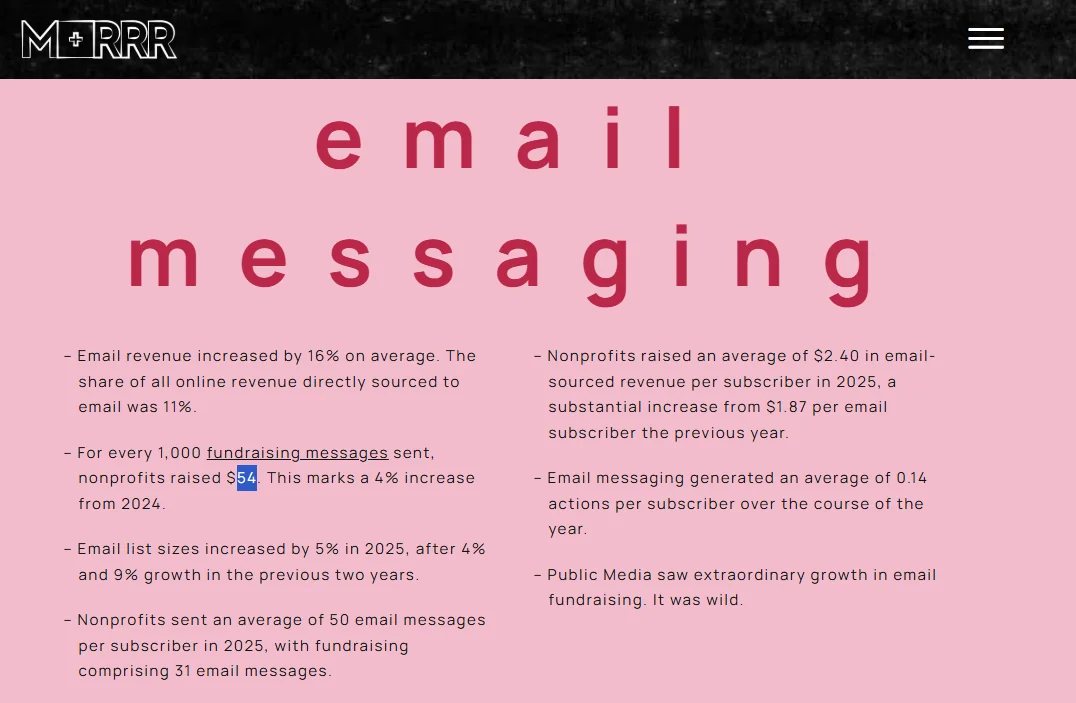
The second-gift rate depends on follow-up, and generic email alone will not carry it. In M+R’s 2026 email benchmarks, fundraising emails had an average response rate of 0.05%, and nonprofits received $54 for every 1,000 fundraising emails sent. That benchmark covers mass email programs, not event guests, but it shows why a personal note to the people who were in the room beats one more broadcast appeal.
Our guide to member engagement metrics covers how to track this kind of engagement over the whole year.
Quick self-check: is your event setup losing supporters?
- Tickets and donations are collected in different tools.
- Table captains send guest names by email.
- Check-in depends on printed lists.
- Receipts and thank-yous are sent by hand.
- You cannot easily see which guests were new supporters.
Two or more? It is time to connect your event and supporter data before the next event.
How Melora Connect supports nonprofit events
Melora Connect is membership management software for associations, chambers, and civic and nonprofit organizations that keep members and donors in one system.
Every guest, buyer and donor sits on one record in the Member CRM. Event pages, ticket tiers, member pricing, discount and access codes, group and table orders for galas, and members-only events are built in. Tickets, donations and dues are paid by card or ACH through MeloraPay, and every dollar lands in your own Stripe account. One registration flow serves in-person, virtual and hybrid events, with each online event carrying its own join link (with Zoom connected, Melora Connect creates the meeting and checks in the people who joined). On event day, your team checks guests in at the door from the same list, and the events dashboard shows tickets, attendance and revenue together. Afterward, segmented email with merge fields and surveys go out from the same platform. See the full module on our Melora Connect events page.
Coming soon: the HQ staff app for walk-in registration and QR check-in, QR tickets in the Melora Connect Go members app, volunteer management and fundraiser pages. If auctions or peer-to-peer pages are central to your event, keep a dedicated tool for those.
You get a team, not a login. Our team sets up your event pages, ticket tiers and table options with you, and staffed onboarding is included on every plan.
Bring your next gala’s ticket tiers. We will set up your tickets, tables and donation options live, on one supporter record. Book a demo
Frequently asked questions about nonprofit event planning software
What is nonprofit event planning software?
Nonprofit event planning software is a platform that helps nonprofits plan, sell, run and follow up on fundraising events. It keeps tickets, table sales, donations, check-in and supporter records in one place, so every guest becomes a relationship the organization can thank, invite again and ask for support, rather than a one-time ticket sale.
What is the difference between nonprofit event planning software and event management software?
Event management software covers the full lifecycle of any event, from planning and promotion to registration, check-in and reporting. Nonprofit event planning software applies that to fundraising: it combines tickets with donations, supports table sales for galas, and adds every guest to a supporter record so the follow-up can turn attendees into repeat donors.
Can guests add a donation when they buy a gala ticket?
Yes, good nonprofit event planning software lets guests add a gift during ticket checkout, in the same payment. It is one of the most useful features to look for, because the donation is tied to the guest’s record. Also check that receipts show the ticket and gift amounts separately for the guest’s tax records.
How do you sell tables at a nonprofit gala?
Sell tables as a group or table order: one buyer, often a company or board member, pays for the whole table, then adds guest names before the event. This avoids chasing names by email, gives every guest their own record and check-in, and lets you thank both the table buyer and the guests afterward.
How soon should you follow up with gala guests?
Follow up with gala guests within a day, while the evening is still fresh. Send every guest a thank-you, and send first-time guests a more personal note with a clear next step, such as a smaller event or a volunteer invitation. Survey guests within a week and report results to your board within two.
Are fundraising events still worth it for nonprofits?
Yes. In Bonterra’s 2026 Fundraising Outlook Report, 97% of nonprofits held an event in 2025 and 77% of those met or exceeded their event fundraising goals, while 46% of nonprofits without events fell short of targets. Events pay off most when guests are recorded and followed up, not left on a spreadsheet.
The bottom line
The right nonprofit event planning software does more than sell tickets. It puts tickets, tables and donations in one checkout and every guest on a supporter record your team will use. It turns one night of support into a lasting relationship with every guest.
Turn your next event into lasting support. See tickets, table orders, donations and check-in on one supporter record in Melora Connect. Book a demo
Sources
- Bonterra (GlobeNewswire), Events Remain the Strongest Revenue Engine: 77% of Nonprofits Met or Exceeded Their Event Fundraising Goals in 2025, Dec 16, 2025.
- Association of Fundraising Professionals, Fundraising Effectiveness Project Reports Strongest Revenue Growth in Five Years, Even as Fewer Donors Give, Apr 21, 2026.
- Giving USA Foundation, Giving USA: charitable giving rose to $617.20 billion in 2025, surpassing the $600 billion mark for the first time, Jun 23, 2026.
- M+R, Fundraising: M+R Benchmarks 2026, Apr 22, 2026.
- M+R, Email: M+R Benchmarks 2026, Apr 22, 2026.